You can read the briefings. You can attend the handovers. But until you step off the plane, you don’t really understand what it means to deliver technology services on a remote island.
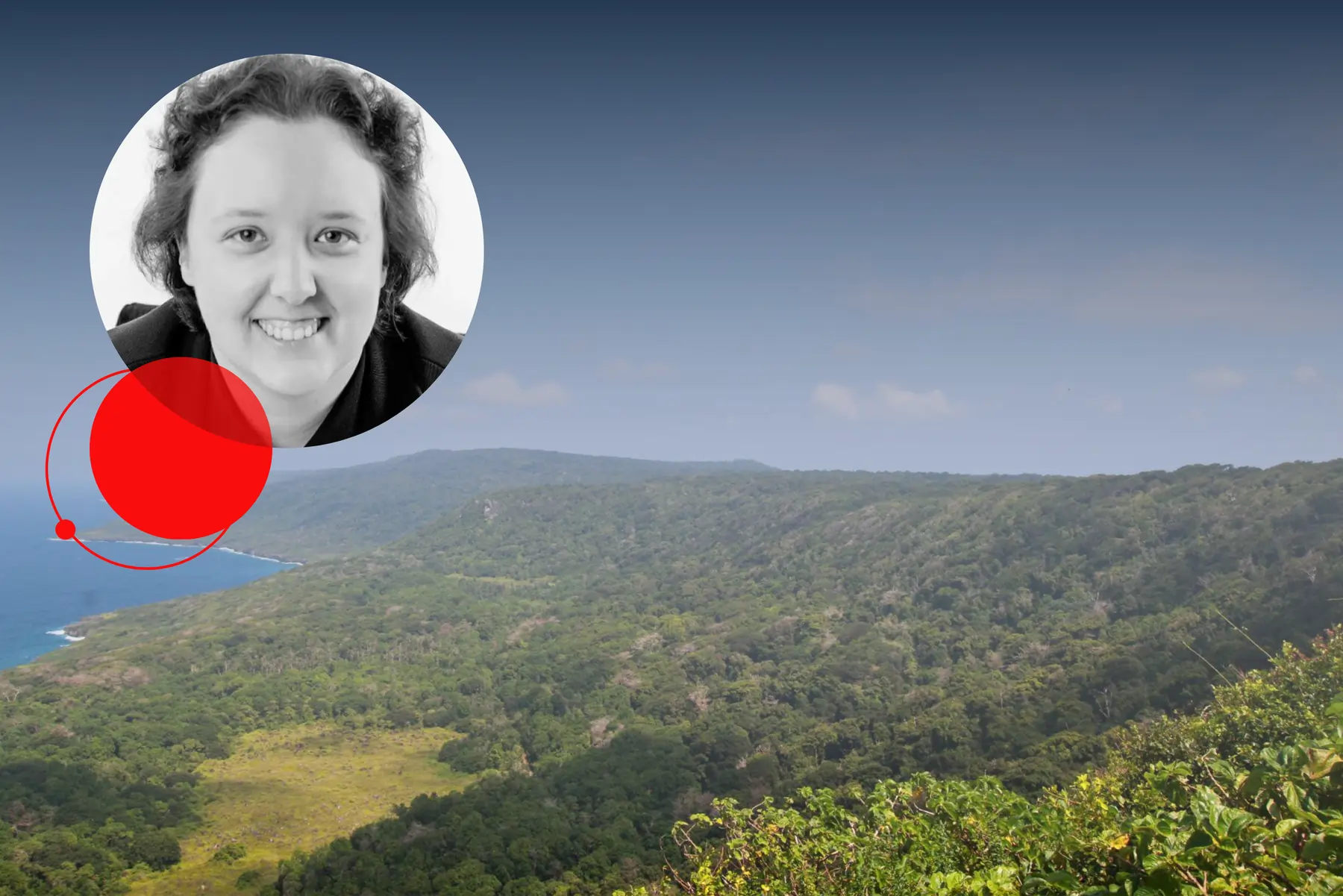
Myself and crew member Ray Chand were tasked with travelling to Christmas Island, followed by Cocos (Keeling) Island, to support some vital IT support a customer required.
Before we left for the islands, we were briefed on the essentials. We needed to prepare for limited connectivity, tight baggage allowances, potential flight delays and cyclone season.
All true – but it’s an incomplete list. Our experience saw a delayed flight to Christmas Island due to high winds, the need to pre-book at the island restaurant so we were fed that first night (no delivery available), and minimal mobile coverage (and none at all on Cocos Islands).
Well, then. Forearmed and forewarned, we boarded the plane to Christmas Island.
Arriving is a sensory experience. You fall asleep to waves crashing, aware that weather events matter here in a very real way.
Remoteness sharpens your awareness. It also sharpens your understanding of risk.
Out here, everything matters more. That’s not a limitation. It’s clarity.
Island life runs on trust
One of the first things you notice is how much is dependent on community.
Cars aren’t locked. Doors aren’t locked. Lunch happens at the same time for everyone because this isn’t just a location, it’s a shared ecosystem. Everyone knows everyone.
From a systems perspective, it’s fascinating. Low rates of crime are sustained by strengthened social cohesion.
It’s a powerful reminder that resilience doesn’t come from technology alone. It comes from trust – and technology should strengthen that trust, not replace it.
For us, that meant working in partnership. Listening carefully. Respecting the rhythm of the island. Supporting healthcare teams without disrupting their day-to-day work.
In remote communities, relationships are infrastructure too.
Scarcity changes how you think
On an island, supply chains aren’t abstract. They’re visible.
Food is limited. Essentials are expensive. Flights determine what arrives and when. There is no “just order it overnight” like us mainlanders do.
Scarcity shifts your mindset. You plan more carefully. You consume more intentionally. You pack differently.
And as a technology provider, you think differently too.
There’s no quick run to a supplier for replacement parts. Vendors aren’t around the corner. Equipment has to arrive with you within strict baggage limits. When a critical item nearly doesn’t make the flight, you feel the weight of that dependency immediately.
Remote delivery is about designing services that assume constraint, and still perform.
From a technical standpoint, this was a masterclass in fundamentals. We conducted laptop, asset and server rack audits. We cleaned server room fans, creating what looked like a small landfill of dust in the process. We reviewed build rooms, untangled legacy cable management and pieced together infrastructure histories that existed partly in spreadsheets and partly in memory.
At one point, old equipment was stored in spaces that had evolved with the needs of the site – a practical reminder that environments adapt long before documentation catches up.
This is where problem-solving stops being theoretical.
You work around active hospital staff. You avoid disrupting nurses mid-shift. You reconcile missing context with physical reality. You make decisions with incomplete information – and you own them.
In remote healthcare environments, the network isn’t just IT.
- It’s patient records.
- It’s communication.
- It’s connection to the outside world.
When systems fail in remote Australia, the impact is immediate and human. That’s why standards matter everywhere.
Pride in the invisible
What stayed with me most was pride. Not the flashy kind, the quiet kind. Pride in improved cable management. In cleaned racks. In build rooms left more organised than we found them. We even sourced cable managers locally on Christmas Island and transported them to Cocos because properly maintained infrastructure shouldn’t be a mainland luxury.
Good managed services often go unseen. But agency leaders understand this truth: Resilience is built in the details.
In geographically dispersed organisations – especially those delivering essential services – consistency of standards is what protects continuity.
Whether you’re in a capital city or an island community, infrastructure deserves the same care.
None of this happens alone.
Me and Ray coordinated splitting our responsibilities, navigated four-wheel drives over steep island roads, shared satellite connectivity, and relied on tools like Starlink when available. We adjusted to SIM changes, shifting time zones and limited bandwidth.
But the real enabler was communication. Clear communication builds trust, trust enables decision-making, decision-making keeps services running. That sequence doesn’t change with geography.
Speaking of which, the islands themselves are extraordinary.
Blowholes. Steep, winding roads. Beaches like Gretel Beach. The famous red crab migrations that bring traffic to a respectful stop. Even visits from naturalists like David Attenborough underscore how unique these ecosystems are.
You’re reminded quickly: this isn’t scenery. It’s a living system.
Even driving requires care. Even waste washing ashore tells a global story. Communities adapt creatively – repurposing materials, finding solutions, looking after what they have.
There’s a lesson in that for technology too. Sustainability isn’t a policy document. It’s behaviour.
To Cocos Islands we go
The Cocos (Keeling) Islands feel smaller again. Quieter. Slower.
Language matters more. Dress codes matter. Religious customs matter. Community norms shape daily life. Even something as simple as a pizza going through airport security becomes a shared moment.
Delivering services across diverse, remote communities requires cultural intelligence as much as technical expertise. Standard operating procedures need to flex without compromising outcomes.
That balance, and respect for the people of the community, is what makes partnerships work.
Idyllic and like a scene from an AI-generated dream, Cocos still presented significant challenges – it wasn’t technical, it was the distance.
Limited contact with family reinforces something we often overlook as mainlanders: connection is maintenance. Daily check-ins matter. Support networks matter. Fly in, fly out (FIFO) experience helps. Shared routines help.
Remote work is sustained by people who choose to show up – for customers and for each other. At Kinetic IT, that’s part of how we support our customers; we show up and step into the customer’s world, building empathy and understanding.
IT Support In Remote Australia: Working At The Edge
Working on Christmas Island, and then Cocos (Keeling) Islands reinforced something I already believed but hadn’t fully appreciated: Great technology services aren’t defined by ideal conditions.
They’re defined by adaptability, respect, and fundamentals done well.
Remote environments strip away convenience. What remains is what truly matters: communication, trust, problem-solving, and pride in work that most people will never see but rely on every day.
For complex organisations operating across vast geographies, that’s the difference between a supplier and a partner.
And honestly? That’s the kind of work worth doing.
Connect with Sarah van Koningsbrugge on LinkedIn. Find out more about Kinetic IT’s services and solutions.