Meghan Quinn PSM and Lieutenant General Susan Coyle AM CSC DSM will become Australia’s first Secretary of the Department of Defence and Chief of Army, respectively. Both historic appointments – they’re the first women to hold the titles.
This news lands exactly the right moment – it puts a name and a face to what systemic progress actually looks like, in the wake of Defence Connect’s inaugural The Progress Report event where achievements such as these were central to discussions.
Ms Quinn has led a distinguished career as a senior leader in the Australian Public Service, including the role of the Secretary of the Department of Industry, Science and Resources. Lieutenant General Coyle’s career spans nearly four decades – beginning in the Reserves in 1987 and progressing through tactical, operational and strategic appointments including Commander Forces Command, Commander Joint Task Force 633, Head Information Warfare and her current role as Chief of Joint Capabilities.
Their appointments are the outcome of sustained capability and investment in women in Defence. And as Lieutenant General Coyle said to Prime Minister Anthony Albanese when offered the top job: You can’t be what you can’t see.
It’s a milestone worth celebrating. And it’s also a prompt to ask the question: what does it take to get here, and how do we make sure this kind of leadership becomes the norm rather than the headline?
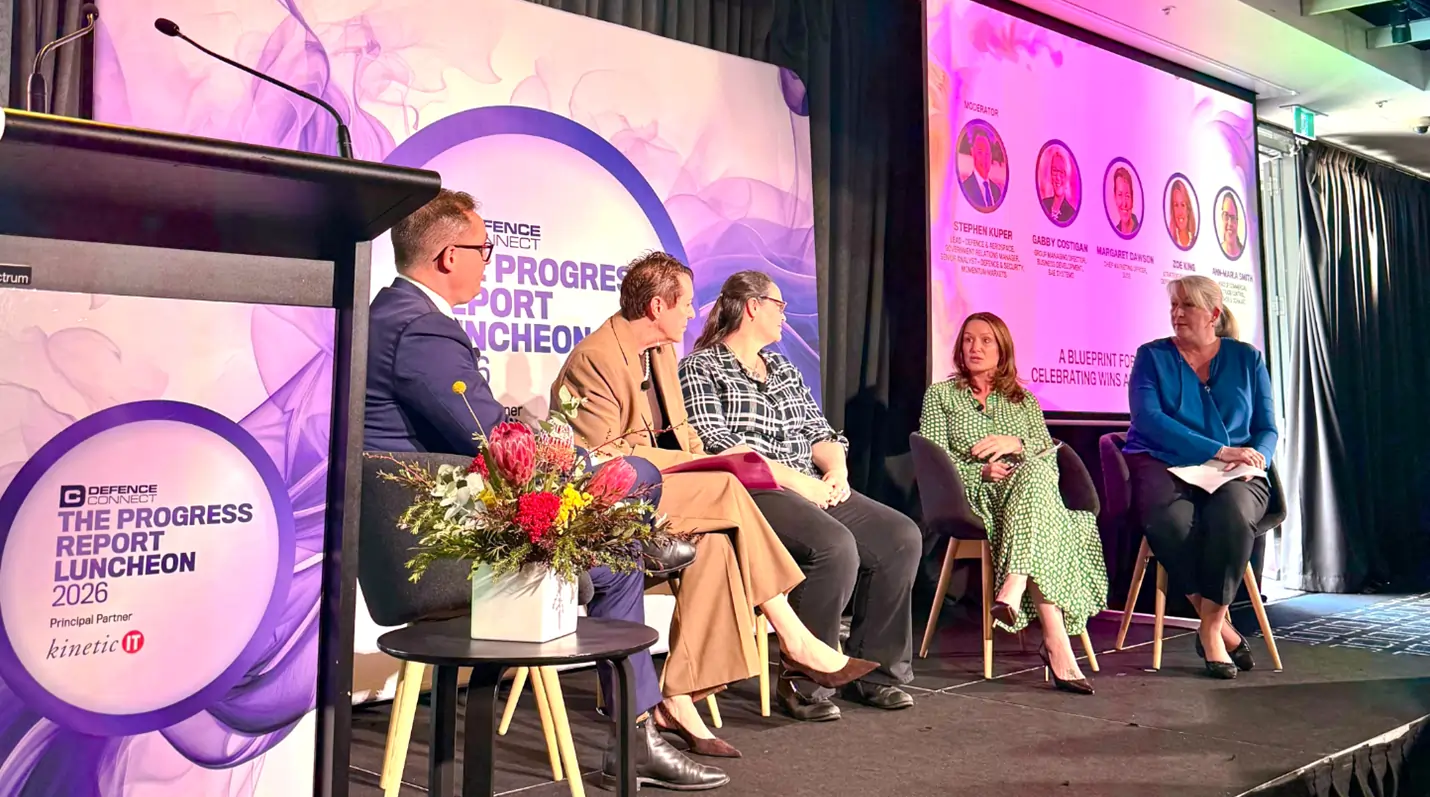
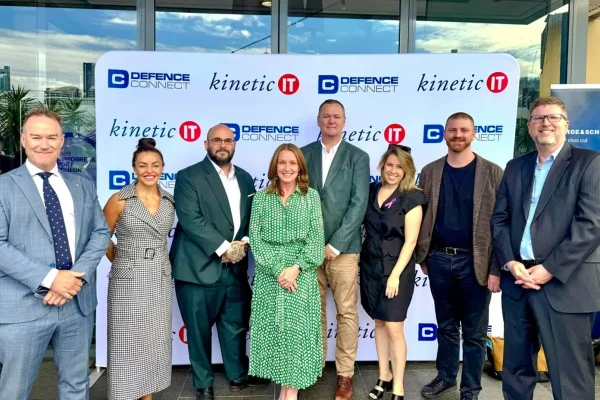 Kinetic IT crew at the inaugural Defence Connect Progress Report Luncheon held at Doltone House, Sydney.
On 26 March 2026, Kinetic IT joined industry leaders, practitioners and advocates at the Progress Report Luncheon, a forum reflecting on the Defence industry’s journey towards true gender equity.
With Kinetic IT as Principal Partner of the event, Chief Digital Officer Murray Thompson AM CSC opened the forum. He candidly acknowledged the optics of a man opening a women’s equity forum, noting his role as an ally standing shoulder-to-shoulder with women in advancing the conversation on equity and inclusion.
Attendees highlighted the deeply personal and compelling keynote delivered by Major General Michelle Campbell AM, Head of Reserve and Cadet Support in the Australian Department of Defence, who shared how she has pursued her Defence career on her own terms. The day was bookended by insightful all-women panel discussions – moderated by Defence Connect’s Stephen Kuper – exploring opportunities to rebalance the scales through recruitment, leadership and allyship.
Zoë King, a Lieutenant Colonel and now Strategic Client Partner for Defence and National Security customers at Kinetic IT, joined one of the luncheon’s panels to discuss gender equity progress to date – what is working, what is not, and where the greatest opportunities lie to move the dial.
Zoë knows the journey well. With more than two decades in the Australian Regular Army and ongoing service in the Army Reserves, she has observed progress first-hand.
From navigating communications delivery in the Middle East, to now ensuring technology delivers the outcomes the sector needs, Zoë and her fellow panellists reflected on the significant, long-term effort required to achieve meaningful gender equity across Defence.
“Programs like AUKUS, the Hunter Class Frigate and JORN featured strongly in the discussion – not just as major capability deliveries, but as long-term, nation-building programs,” Gabby Costigan of BAE Systems shared on LinkedIn post-luncheon. “They represent a real opportunity to shape workforce outcomes, lift the broader industrial ecosystem and build sovereign capability that Australia can sustain under pressure, over generations. How we design and lead these programs will matter just as much as what we deliver.”
Here are two key insights from the Defence Connect Progress Report Luncheon worth carrying forward.
Gender equity progress is a marathon, not a sprint
Along the same lines as what Gabby Costigan shared, a familiar pattern emerges in how organisations approach gender equity: a pilot program here, a policy update there, a working group with good intentions but no mandate.
The issue isn’t that these initiatives are wrong – it’s that they’re designed with start and end dates. As speakers at the Progress Report Luncheon reinforced, systemic change doesn’t work that way.
What the conversation made clear is that if the Defence industry is serious about shifting outcomes, inclusion cannot be treated as an initiative. It must be embedded into the architecture of how programs are designed, governed and sustained.
Major capability programs like AUKUS, the Hunter Class Frigate and JORN are decades-long, nation-building commitments that will shape Australia’s sovereign capability for generations. How the workforce is structured within these programs – who leads, who progresses, who is retained and why – is as critical as the capability being delivered.
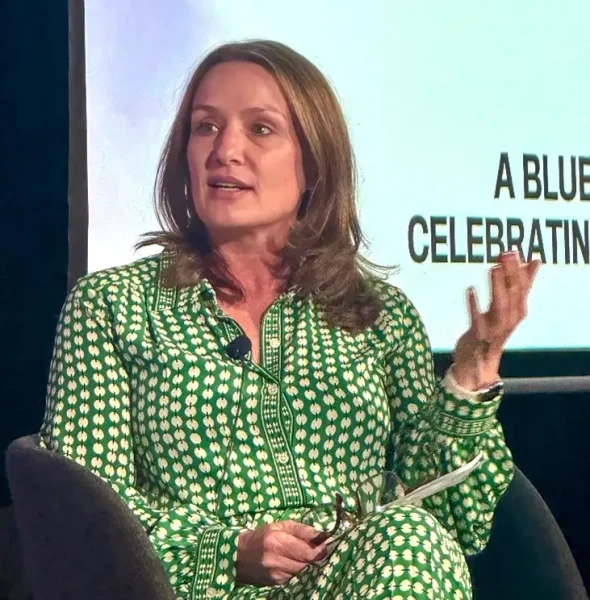 Kinetic IT Strategic Client Partner for Defence and National Security Zoë King featured on a Progress Report Luncheon panel discussion about gender equity progress to date.
Retention is the real metric in gender equity
The second key theme was what the industry is measuring – and what it risks overlooking.
Hiring metrics are visible and easy to report. But if the goal is genuine inclusion, the more telling indicators sit at the 10 and 15-year mark:
- Are women progressing into senior leadership?
- Are people being developed into roles that match their capability, not just their point of entry?
- Are working conditions flexible enough that talented people don’t have to choose between a life and a career?
Flexibility came up repeatedly – not as a lifestyle benefit, but as an enabler of performance and retention. If the structure of work makes it harder for talented people to stay, that’s not a people issue – it’s a design issue.
On the panel, Zoë put it plainly:
“We talk a lot about attracting women into Defence and Defence industry, but attraction without retention is just churn. The question we should be asking is: what does this industry look like at someone’s 15-year anniversary, and are we building the conditions, trust and values that get them there?”
Gender equity in Defence: The new frontier
Lieutenant General Coyle’s appointment is a landmark moment, and a long time coming. The fact her appointment was announced within a fortnight of the inaugural Progress Report Luncheon is serendipitous.
But the real work of building a Defence industry that’s resilient, inclusive and genuinely future-ready happens in the years between milestones – in governance decisions, program designs and the cultures organisations choose to build. That’s where it counts.
Kinetic IT is proud Principal Partner of Defence Connect’s Progress Report Luncheon. Find out more about diversity, equity and inclusion at Kinetic IT.